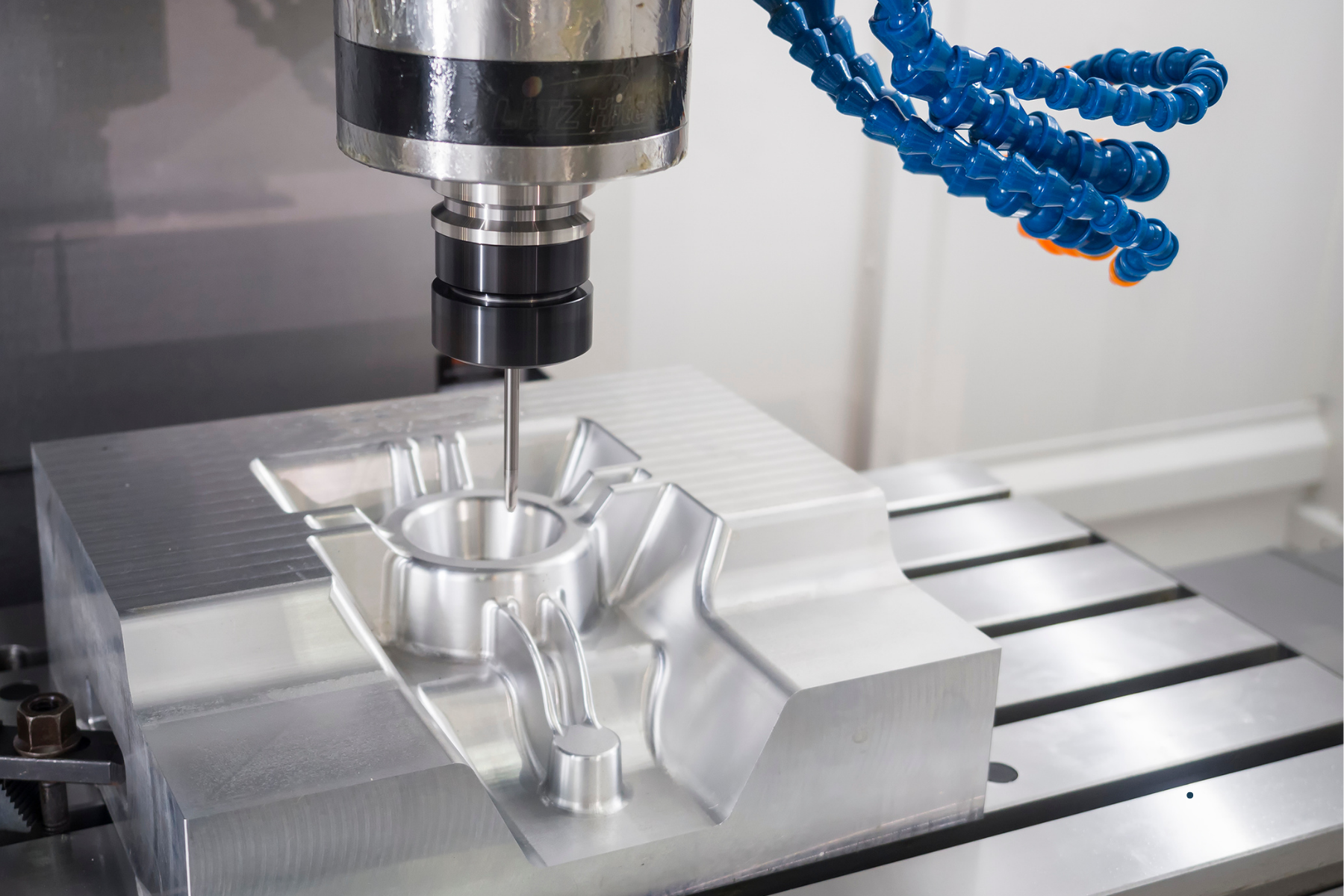
In the high-pressure metal forming sector, the toolroom is the most fundamental element that determines the success of a mass production line. Aluminum injection mold manufacturing is an advanced field of mechanical engineering requiring micron-level precision, where molten metal is injected at extremely high speeds and pressures. At Arena Metal, we manage this critical process—which directly impacts your project’s lifecycle and casting quality—end-to-end within our own state-of-the-art facility.
Digital Design and Pre-Manufacturing Analysis for Aluminum Injection Molds
In our toolroom, the process does not begin by machining steel blocks, but with digital engineering in a computer environment. First, we perform casting suitability analyses on the 3D part data provided by our customers. Undercuts, insufficient draft angles, and non-uniform wall thicknesses are identified and optimized at this stage. Subsequently, utilizing Siemens NX and advanced CAD software, the mold’s cavity-core blocks, hydraulic or mechanical sliders, and ejector sets are fully constructed in a digital environment. This ensures that all geometric errors are prevented before moving on to the physical aluminum injection mold manufacturing phase.
The Role of Simulation Technologies in the Aluminum Injection Mold Manufacturing Process
Before the first drill touches the mold steel, the designed mold is tested in a virtual environment by simulating liquid aluminum injection. Thanks to advanced casting simulation software, the flow of liquid metal from the runners into the mold cavity, the evacuation paths of the air inside, and the thermal stresses that may occur during solidification are monitored millisecond by millisecond. This digital test integration eliminates the possibility of revisions on the shop floor after aluminum injection mold manufacturing is complete. Specialized venting channels or overflow wells are added to areas with air entrapment risks during the design phase, guaranteeing error-free casting.
Advanced Machining and Steel Technology in the Toolroom
During the manufacturing phase of the approved mold design, premium hot-work tool steels (such as 1.2344, 1.2343 ESR, etc.) capable of withstanding the corrosive and high-temperature effects of aluminum are utilized. The aluminum injection mold manufacturing carried out in our factory comes to life through the following advanced machining technologies:
-
High-Speed CNC Vertical Machining: Ensures the high-precision shaping of mold cores to micron levels both before and after heat treatment.
-
Sinker EDM (Electrical Discharge Machining): Sharp corners or deep rib channels that CNC cutting tools cannot access are machined by melting the steel via electrical arcs with the help of copper or graphite electrodes.
-
Wire EDM: Regions requiring very high linear accuracy, such as core pockets and ejector pin holes inside the mold, are prepared by cutting with micron-level precision.
Metallurgical Strengthening and Surface Treatments
Machined mold blocks are controllably hardened in vacuum heat treatment furnaces to handle high mechanical loads and pressures. However, a professional aluminum injection mold manufacturing process does not end here. Liquid aluminum striking the mold surface at high speeds causes erosion and soldering over time. To prevent this, Nitriding or specialized surface coating treatments are applied to the mold surfaces. This process creates a hard armor on the outermost layer of the steel, preventing liquid metal from sticking to the mold and extending the mold’s operational lifespan to hundreds of thousands of cycles. Finally, precise manual benching and polishing procedures are applied to ensure the mold leaves a smooth finish on the part.
T1 Trial Run and Transition to Mass Production
The assembled mold is mounted onto an aluminum injection press of appropriate tonnage on the production line, and the first hot test—the T1 Trial Run—is executed. The operating performance of the mold, the movement synchronization of the hydraulic cores, and the ease of part ejection are observed in a live production environment. The first sample parts cast are taken to the 3D Coordinate Measuring Machine (CMM) in our quality control laboratory. All critical dimensions and tolerances on the technical drawing are scanned and reported. Once the accuracy of the part geometry is 100% proven and customer approval is obtained, the successfully completed aluminum injection mold manufacturing project is transferred to the mass production phase.
Global Standard Mold Components and Elements
Using high-quality steel for a mold is not enough; its mechanical and hydraulic parts must also meet world standards. In the aluminum injection mold manufacturing projects we undertake, we exclusively use standard components from globally recognized leading brands to ensure seamless and downtime-free mold operation:
-
Mold Base and Elements: Certified materials offering high wear resistance are preferred for mold pockets, plates, and pillars.
-
Ejector Pins and Bushings: Nitrided or DLC (Diamond-Like Carbon) coated ejector systems meeting Meusburger or Hasco standards, suitable for high-temperature operations, are utilized.
-
Hydraulic Core Cylinders: Vega or HPS hydraulic cylinders are integrated to maintain leak-tightness under high pressure and to ensure flawless mold opening-closing synchronization.
-
Temperature Control Components: Corrosion-resistant stainless steel fittings and connectors are used to keep the mold at a constant temperature during operation.
Cost Optimization in the Aluminum Injection Mold Manufacturing Phase
Mold investment represents the largest initial capital expenditure (CAPEX) of a project. At Arena Metal, we share how we optimize your aluminum injection mold manufacturing costs through our engineering power without compromising quality:
-
Multi-Cavity (Family Mold) Design: If your project includes 2 or 3 different small parts assembled together, rather than undertaking separate aluminum injection mold manufacturing for each, we place all components into a single mold base (family mold), lowering your mold investment cost by up to 50%.
-
Interchangeable Core (Insert) System: We produce a single master mold for variations of parts that share the same body but differ by a small logo, text, or hole configuration. By manufacturing modular inserts only for the changing sections, we eliminate the need to create a new mold for each variant.
-
Correct Tonnage – Mold Alignment: We design the outer dimensions of the mold to be fully compatible with the minimum and maximum clamping dimensions of the injection presses in our facility. By avoiding unnecessarily large mold blocks, we save on raw material costs.
Frequently Asked Questions (FAQ)
Why is the draft angle on a component important in an aluminum injection mold manufacturing project? As aluminum solidifies, it shrinks slightly and grips the mold steel. If there are no 1-2 degree draft angles (taper angles) on the vertical walls of the component, the part will deform or scratch the mold surface when the ejector pins push it out.
What is the function of in-mold localized cooling (Jet Cooling)? In components with varying wall thicknesses, thicker sections cool down slowly. This causes shrinkage porosities inside the part. High-pressure water lines (Jet Cooling) directed specifically to those thick areas of the mold provide fast local cooling and prevent defects.
Why is modular architecture preferred during the aluminum injection mold manufacturing phase? The areas of the mold most prone to wear and directly exposed to liquid metal are designed as interchangeable inserts. Consequently, when these sections wear out during mass production, time and money are saved by replacing only those small components rather than rebuilding the entire mold.
Who is responsible for the maintenance and warranty of the molds you manufacture? The periodic maintenance, stress-relieving heat treatments, and potential wear revisions of all molds manufactured by us and running mass production in our factory are carried out entirely by Arena Metal free of charge under our comprehensive mold warranty.