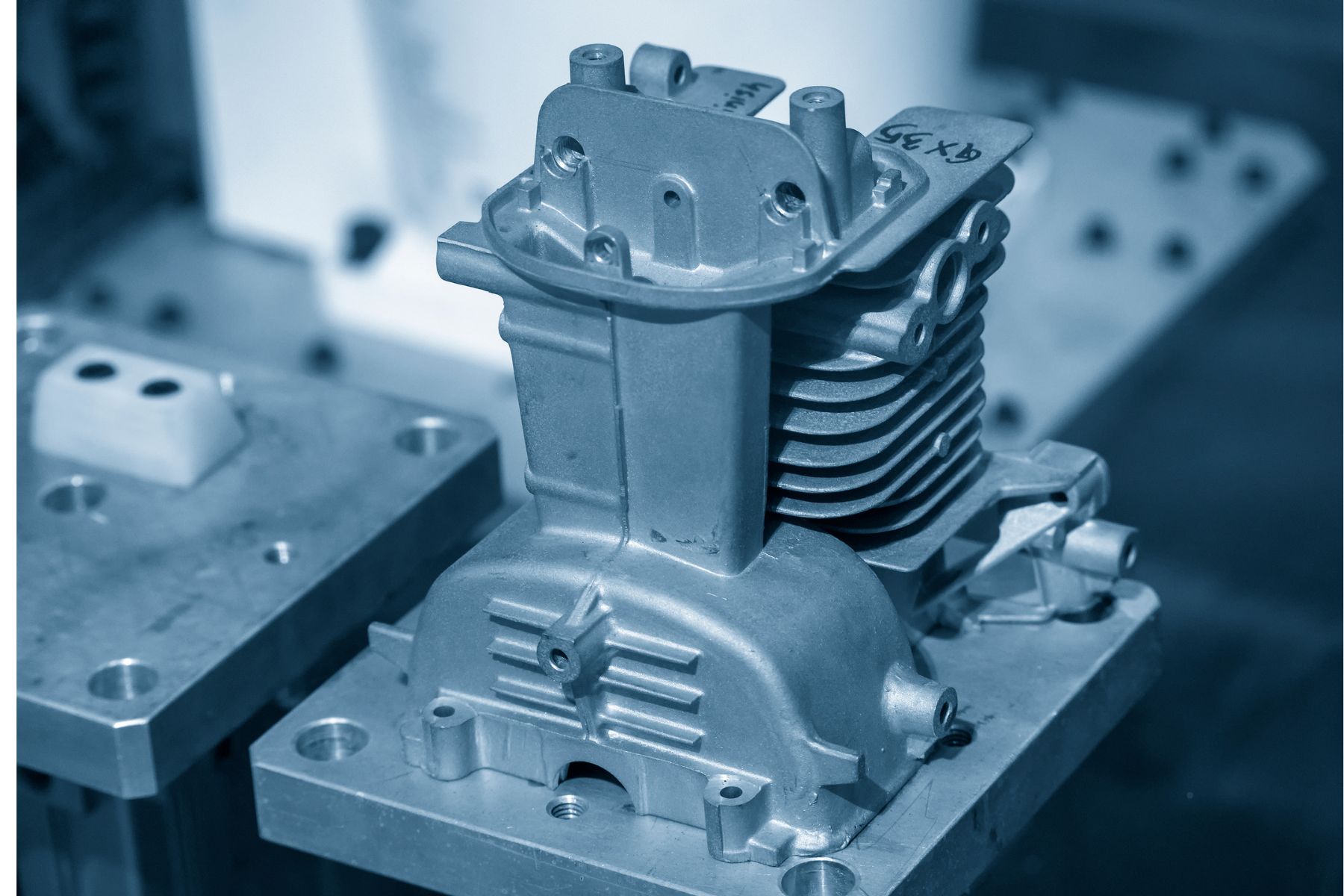
In today’s manufacturing industry, the highest expectations from component production are high strength, lightweight properties, millimetric precision, and sustainability in mass production. Aluminum injection casting (High-Pressure Aluminum Die Casting) is a modern manufacturing method that meets these criteria at the highest level by injecting molten aluminum alloys into steel molds under extreme pressure.
At Arena Metal, we offer global-standard aluminum injection casting solutions for the complex component needs of sectors requiring high precision, ranging from automotive to defense.
Why Choose Aluminum Injection Casting? (Cause-and-Effect Relationships)
Behind the selection of this method in industrial component production lie powerful engineering causes and the critical commercial/technical effects they provide:
-
Cause: Shaping under high pressure
Effect: The molten metal flawlessly penetrates even the finest cavities of the mold. Consequently, even components with very thin walls and complex geometries are manufactured error-free and at high density.
-
Cause: The lightweight advantage of aluminum alloys
Effect: Vehicle weight is reduced, particularly in the automotive and e-mobility (EV) sectors. This directly enhances energy efficiency while contributing to carbon emission reduction.
-
Cause: Steel mold utilization and rapid cycle times
Effect: Time and cost optimization are achieved in mass production. Thousands of components can be cast with the exact same dimensional stability within very short periods.
-
Cause: Smooth surface quality
Effect: Because the components coming out of the mold possess excellent surface quality, post-casting machining (such as grinding, milling, etc.) is minimized, reducing labor expenses.
How is Aluminum Injection Casting Performed? Process Steps
The aluminum injection casting process consists of 5 fundamental stages requiring advanced technology and engineering control from design to shipping:
1. Mold Preparation and Lubrication
Before every injection cycle, the surface of the die casting mold is coated with specialized chemical lubricants via a spraying method. This process balances the temperature of the mold (preventing thermal shocks) and ensures that the cast component detaches from the mold flawlessly without soldering.
2. Injection and High-Pressure Phase
The aluminum alloy (typically Etial 140 or alloys conforming to DIN EN 1706 standards) is brought to a liquid phase in melting furnaces. Captured via automation systems or robotic arms, the molten metal is transferred into the shot sleeve. With the help of a hydraulic piston, it is shot into the steel mold cavity at extremely high speeds and pressures.
3. Solidification and Cooling
The liquid aluminum injected into the mold is held under high pressure to solidify while maintaining the mold form. Integrated cooling channels within the mold ensure rapid and uniform cooling of the metal. Maintaining high pressure during this phase prevents porosity formation inside the component.
4. Mold Opening and Part Ejection
Once the solidification process is complete, the hydraulic systems of the injection press open the mold. Ejector pins are activated, pushing the shaped aluminum component out of the mold cavity. Robotic arms remove the part from the line.
5. Gating Removal and Quality Control
The runners, overflow wells, and flashes on the cast component are cleaned via trimming presses or mechanical methods. The component is then approved after being subjected to spectrometer analysis, leak testing, and 3D coordinate (CMM) millimetric dimensional inspections.
Technical Comparison: High-Pressure Die Casting vs. Permanent Mold (Low-Pressure/Gravity) Casting
To help you select the ideal method for your project, we have compared the technical parameters of the aluminum injection (high-pressure) method with traditional permanent mold casting:
| Technical Feature / Parameter | Aluminum Injection Casting (High-Pressure) | Permanent Mold Casting (Low-Pressure / Gravity) |
| Minimum Wall Thickness | 1.5 – 2.5 mm (Very thin parts can be produced) | 3.0 – 5.0 mm (Thicker walls are required) |
| Production Speed (Cycle Time) | Extremely High (Highly suitable for mass production) | Medium / Low (Slow cooling cycle) |
| Surface Smoothness (Quality) | Excellent (Minimal need for additional processing) | Medium (High need for post-casting machining) |
| Dimensional Tolerance & Accuracy | Extremely High (Millimetric tolerance values) | Medium |
| Mold Cost | High (Special hot-work steels are utilized) | Low / Medium |
| Economic Production Volume | High-volume projects (Typically 5,000+ units) | Low and medium-volume projects |
1. Quality and Testing Standards in Aluminum Injection Casting
For a cast component to be utilized in critical sectors (Automotive, Defense, etc.), it must be tested in compliance with international standards. The quality control methods applied at our facility include:
-
Spectrometer Analysis (Chemical Composition): Samples taken while the melted aluminum is in the liquid phase are analyzed using a spectrometer. The percentages of elements such as Silicon (Si), Copper (Cu), Iron (Fe), and Magnesium (Mg) within the alloy are guaranteed to comply with standards (e.g., EN AC-46000) prior to casting.
-
X-Ray (Radiographic) Inspection: Non-destructive testing (NDT) is utilized to detect invisible blowholes, porosity, and micro-cracks within the internal structure of the component.
-
Leak Testing: Components designed to operate under liquid or gas pressure, such as engine blocks, fuel system elements, or hydraulic valves, are subjected to strict leak-tightness testing using compressed air or water.
-
CMM (3D Measurement) Inspection: Following casting and machining, the millimetric tolerance values of the components are scanned with 3D Coordinate Measuring Machines (CMM) and matched with the technical drawing data.
2. Casting Defects and Engineering Solutions (Defect-Prevention Analysis)
Achieving a zero-defect production milestone is possible through the correct engineering approach. Common defects encountered during the aluminum injection casting process and how we prevent them at Arena Metal are detailed below:
-
Cold Shut: A linear defect formed when liquid metal flows fail to merge at a sufficient temperature inside the mold.
Our Solution: Real-time temperature monitoring using in-mold thermal cameras and optimizing the injection velocity (piston speed) down to milliseconds.
-
Gas Porosity (Air Blowhole): Entrapment of air from the mold cavity or gases generated during injection inside the cast component.
Our Solution: Flawless planning of gate and venting designs prior to production utilizing MAGMA or similar advanced casting simulation software.
-
Sink Marks and Shrinkage Cavities: Volumetric contractions caused by the delayed cooling of thick-walled sections.
Our Solution: Providing uniform wall thickness design consultancy during the part development stage and utilizing in-mold localized cooling (jet cooling) systems.
Frequently Asked Questions (FAQ)
Which alloys are utilized in aluminum injection casting?
Generally, aluminum-silicon-copper alloys offering high fluidity, excellent mechanical properties, and corrosion resistance (such as AlSi9Cu3, EN AC-46000, or standard alloys in the local market like Etial 140 and Etial 160) are preferred.
How is the risk of porosity prevented in cast components?
By optimizing the high-pressure curve applied during injection, structuring correct venting and overflow wells in the mold design, and performing advanced pre-production casting simulations, air entrapment and porosity risks inside the components are eliminated.
Is this method suitable for low-volume productions?
Because the design and manufacturing costs of the steel molds used in aluminum injection casting are high, this method generally offers an economic advantage in high-volume (mass production) projects. For low-volume prototype productions, different casting or machining methods may prove more efficient.
Which surface treatments can be applied to components post-casting?
Depending on your requirements, processes such as shot blasting, vibration, anodizing (anodic oxidation), electrostatic powder coating, wet painting, or direct precision machining (CNC machining) can be applied to deliver components fully ready for final assembly.